BY M. M. DONALDSON
Avoiding specific foods has become trendy in American diets in recent years. Gluten avoidance has taken the lead and this makes it hard for those with food allergies or intolerances to be taken seriously. Eye rolls are often the reaction from those who see it as a fad.
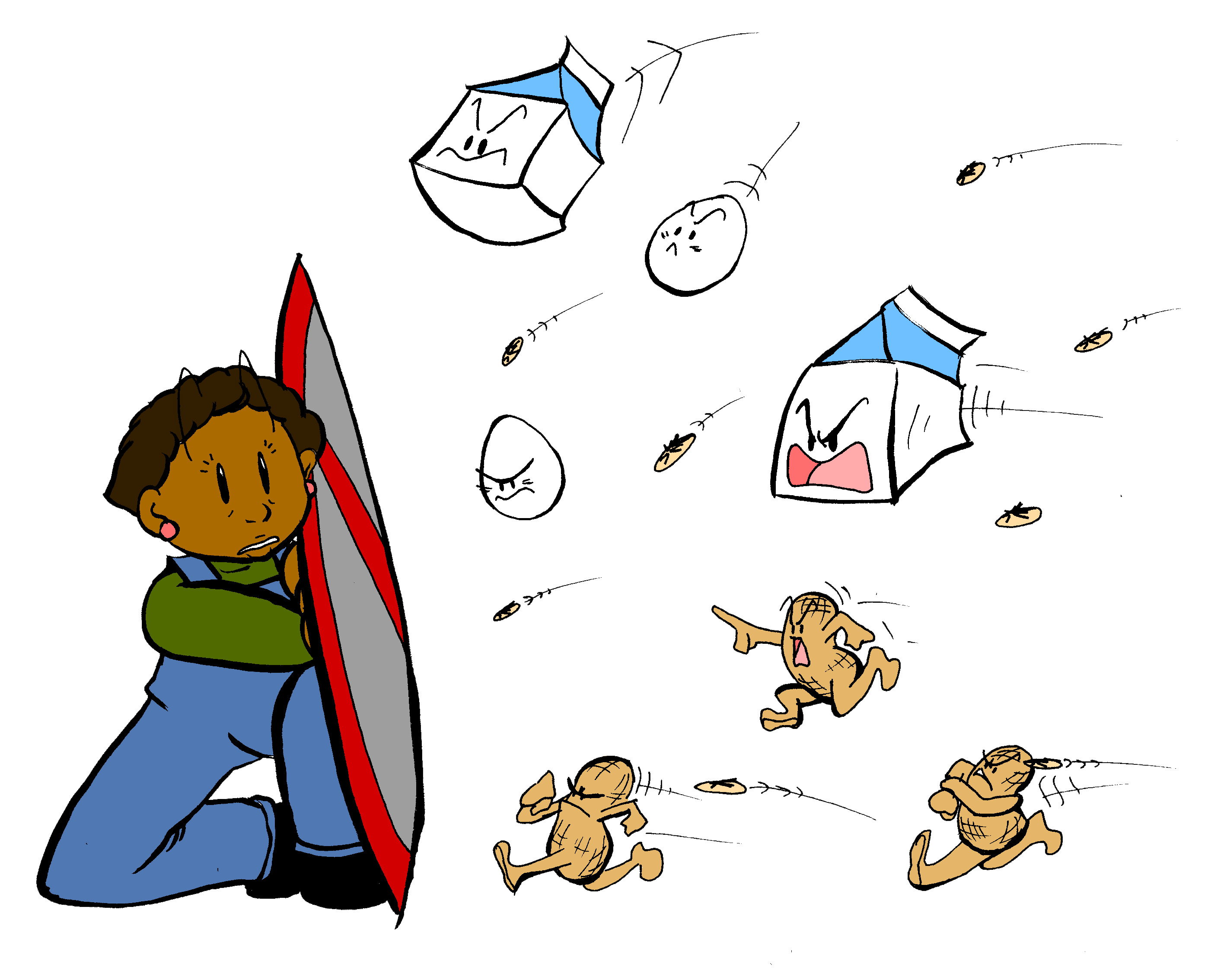
Food nourishes the body, but sometimes it can make it sick for no other reason than the body reacting differently to it. When preparing and serving food for other people, a little forethought does not have to be viewed as an inconvenience when it could potentially avoid a life threatening reaction. In some cases, such as shellfish and peanut allergies, a person does not need to consume the product, but just inhale the scent and have a reaction.
If the immune system identifies a food as an intruder, the reactions can be minor irritations such as a rash, swelling or gastrointestinal problems. An extremely serious reaction is anaphylaxis which requires immediate medical attention.
The National Institute for Health describes anaphylaxis as “a severe, whole-body allergic reaction” where skin irritations and gastrointestinal problems may be combined with a blood pressure or pulse drop and airway constriction.
Intolerances are usually less severe in reaction-wise but can be just as detrimental to health. With celiac disease, the body does not digest the protein, gluten, and the immune system reacts causing cramping of the intestinal tract. The long-term effect of the disease causes damage to the lining of the small intestine.
With other dietary intolerances, the immune system does not kick in when the body is unable to digest the food properly, such as lactose intolerance where the body cannot break down milk sugars.
Allergies and intolerance have no treatment other than avoiding the food according to Senior Medical Advisor Stefano Luccioli with the Food and Drug Administration’s Office of Food Additive Safety. The FDA consumer update also stresses wearing medical alert jewelry or having injectable epinephrine on hand for those with food allergies in case of accidental exposure.
Restaurants are required to alert customers of potential food allergens and many establishments offer other options to ingredients that cause food allergies or intolerances.
Despite the attempt by Domino’s Pizza to offer gluten-free crust, several news outlets reported that the company lost credibility when it was discovered that the gluten-free crusts were made in the same space as the regular wheat flour crusts. Cross-contamination is a constant concern with food safety experts, but it is usually used to describe handling methods for meat and produce.
Many consider gluten-free diets to be a trend which is supported by the survey administered by the NPD Group, a market-research company which estimates nearly 30 percent of Americans are adopting gluten-free diets. It is a staggering difference when compared to the 1.4 percent of the population that’s been diagnosed with celiac disease according to the National Institute of Health.
Because consumers demand substitutions, it has made it easier to find a variety of food for those with celiac disease and other food allergies. With more options, people are trying food that they wouldn’t normally.
Whether it is an allergy or choice, food preferences can be respected. Former caterer and Washtenaw Community College general studies student Tracey Mulcare, 43, from Tecumseh, said she has prepared alternate dishes to meet dietary needs. Clients who informed her of food allergies or intolerances ahead of time allowed her to make menu accommodations.
Following a few basic tips is easy enough to do when entertaining at home, too. Preparing alternate dishes first can minimize cross-contamination which can easily happen without being apparent. Mulcare said saving the labels from pre-made items is easy enough to share with those who ask, as people who have a known food allergen are likely to inquire.
Consideration of food allergies or special diets can sometimes reduce embarrassment or insult at the table, but more importantly it will keep everyone healthy and safe.
M. M. Donaldson is a contributor with The Voice and a journalism student at WCC. She has a bachelor of science in family and community services from Michigan State University, and has several years’ experience with nutrition issues affecting infants through older adults. Follow M.M. Donaldson on Facebook.
comments
After legal battles between the U.S. government and Chinese company, ByteDance, TikTok is now American-owned…
Question: What are your plans for winter break? “I might go on an adventure with,…
More than three decades after his death, the contributions of Morris J. Lawrence remain woven…
Sofia Oganezova | Staff Writer For many international students at Washtenaw Community College, studying in…
Sofia Oganezova Staff Writer For many WCC students, winter break looks very different depending on…
Yana McGuire | Deputy Editor After Washtenaw County Sheriff Alyshia M. Dyer initially stated that…