
More than three decades after his death, the contributions of Morris J. Lawrence remain woven into the history of WCC and the hearts of former students.
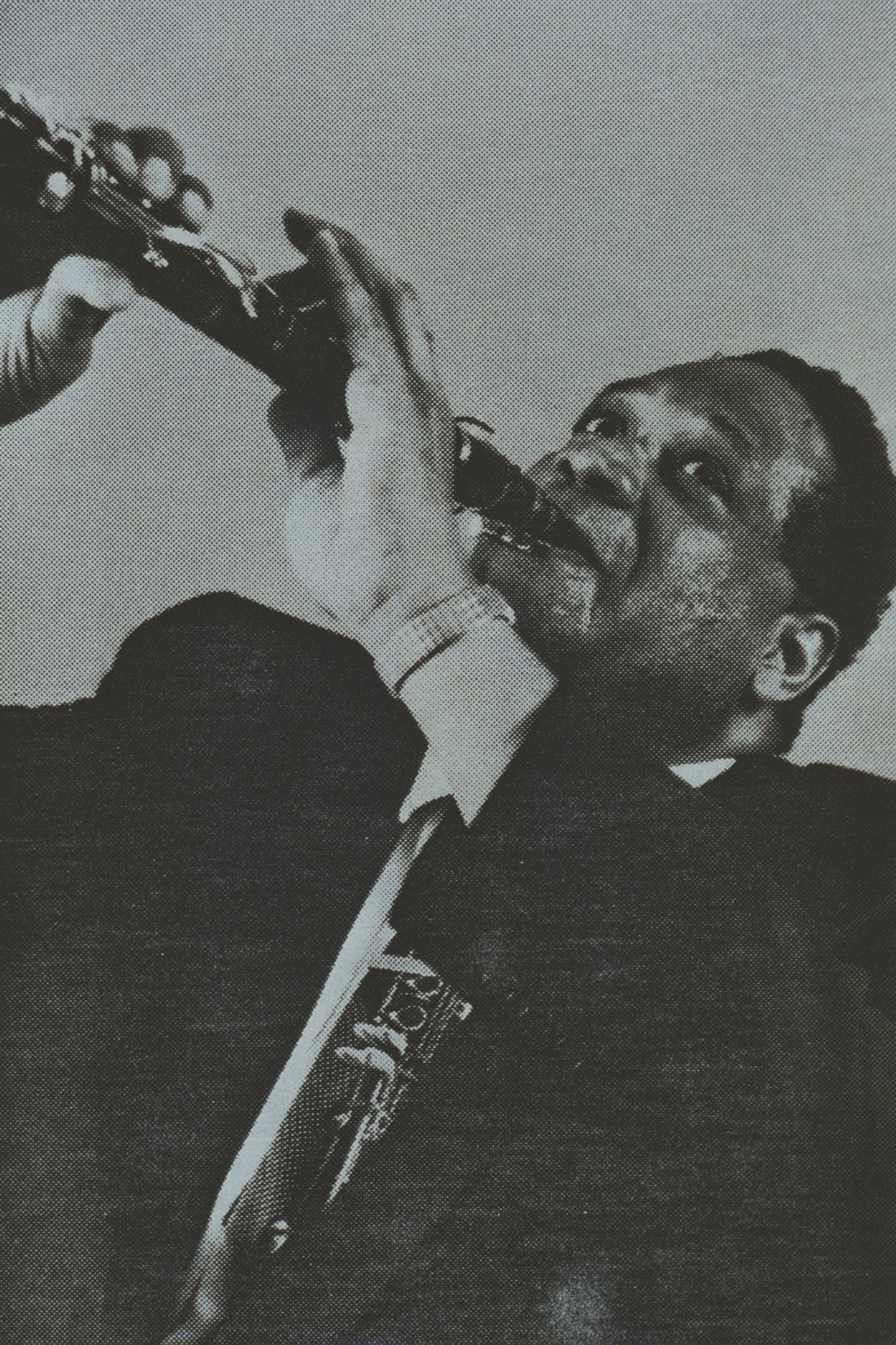
Discover new facts about Morris J. Lawrence and learn why he was so beloved. Courtesy of the Bailey Library.
Yana McGuire | Deputy Editor
It has been 32 years since former director of WCC’s music department, Morris J. Lawrence, died. Yet his influence and genuine love for people still flows through campus hallways — and not just in the building named after him.
Bailey Library part-time support cleric Kenneth Thomas came to WCC in the early 1980s to fulfill work requirements to receive government assistance. Thomas’ love for music led him to sign up for music classes.
He was relieved to find Lawrence’s acceptance and willingness to meet him where he was and to help him grow as a person. Thomas’ admiration for Lawrence was apparent as he fondly recalled the years spent as a piano player in WCC’s Big Band.
“I was at a low point in my life; he showed me love and care for me, which I needed at that time,” Thomas said.
Connecting through music
Lawrence’s ability to make each student feel capable of doing great things is what made him special.
“My job is so important,” Lawrence told The Ann Arbor News in a 1988 interview. “Music is a vehicle that helps people see things better and feel better about themselves. Music encompasses all disciplines, philosophy, geography, history, art.”
Students loved Lawrence because he showed respect and kindness to everyone, no matter their background or ethnicity — a rare characteristic for someone as talented and accomplished as he was.
As a child growing up in New Orleans, Lawrence was expected to be a biologist and follow in the footsteps of other men in his family. However, once he started attending St. Augustine High School, he took a liking to music and asked his parents for a clarinet. His parents agreed, unknowingly giving birth to a true musician with their purchase, according to the Bailey library archive.
Soon he became the first-chair clarinetist, while also holding the position as the band president of the symphonic and marching bands. He also began composing his own music during his high school years — honing a talent that would later draw the attention of the White House.
Lawrence then studied instrumental music at Xavier University of Louisiana, where he met his wife, Darrilyn, who was an elementary school teacher at the time. Lawrence received a bachelor’s degree in instrumental music education in 1961 before moving to Ann Arbor.
More than studying abroad: International students’ lives at WCC
Diving into teaching
Starting in the early 1960s, he taught band classes at St. Thomas High School, while working on his Master of Music degree at the University of Michigan. Lawrence became the director of St. Thomas High School’s music department by 1968. In 1969, he began teaching full time at Washtenaw Community College after a brief part time instructor tenure, along with his job at St. Thomas.
After receiving an Honorary Doctorate from the University’s Center of African American Studies in 1976, Lawrence completed the requirements to obtain a Ph.D. at Bernardine University of Van Nuys, California in 1977.
Hard work and dedication was something Lawrence once stated was taught to him at an early age and it showed in his work. Lawrence wrote 64 dance orchestra pieces, 40 band compositions and four string quartets before he was 30, all while working two jobs and caring for each student he met.
If he was stressed out or overworked it never showed, according to Thomas. The classroom’s atmosphere always felt warm, inviting, and a safe place for students to dive deep into music,Thomas recalls.
“It was almost like playing in a band with Duke Ellington or Count Basie,” Thomas said. “He really taught you to appreciate music and appreciate each other. It was a real learning experience and really joyful.”
Achieving national acclaim
Lawrence’s star power quality wasn’t just felt in the classroom. After an unknown person of political influence saw WCC’s Jazz Orchestra’s performance at the 1981 Montreaux Jazz Festival held in Detroit, Lawrence received a call from the White House inviting them to perform at the Republican fundraising luncheon at Cobo Hall for former President Ronald Reagan on Sept. 24, 1986.
WCC’s Jazz Orchestra performed in many places around the country, including the Notre Dame Jazz Festival, where it was the only community college invited, and the Governor State National Junior College Jazz Festival in Chicago, winning first place in 1975.
In addition, WCC Jazz Orchestra, which had 46 members at time, played in a concert at New York City’s Carnegie Hall on May 15, 1988. The orchestra was invited by Peter Tiboris, principal conductor of the Manhattan Philharmonic.
Those were not the only times Lawrence was nationally recognized. An original composition entitled “An Overture for John-John” was included in the record files of the John F. Kennedy Library. An overture dedicated to the late President’s son, John-John, was written as a present for his birthday. The real meaning of the music is to show the sadness of a birthday without a father. The music was presented to John F. Kennedy Library in two forms. The St. Thomas High School Wind Ensemble recorded it on tape and Mr. Lawrence sent in the original score.
Former first lady Mrs. Jacqueline Kennedy expressed her gratitude for Lawrence’s “thoughtfulness in helping this perpetual memorial to better remember the President and his times,” according to the Washtenaw Voice Archives.
A lasting legacy
During his time at WCC, Lawrence coined the term “Afromusicology,” combining anthropology, history and music. He stated that music is only part of a culture and, to understand black culture, you have to immerse yourself in every facet. WCC started offering an Afromusicology course, which provided the space for Lawrence and the students involved to form an Afromusicology ensemble dedicated to the study and preservation of music, art and dance. Lawrence’s dream was to one day establish an Afromusicology library, but he wasn’t able to accomplish this before his death.
In what little spare time Lawrence had, he sang baritone in local theater productions of opera and light musical comedy, including his own works.
Lawrence’s astounding career was cut short when he died on Dec. 30, 1993 at the age of 53. He was set to play in a concert with one of his musical inspirations, Ellis Maraslis, in the spring of that year.
Around March of 1994, students started a petition to change the name of a building that was called the Job Skills and Campus Events Building as a dedication to the beloved instructor’s name, gaining over 1,500 signatures.
Washtenaw Community College’s Board of Trustees approved the dedication in May of the same year, right before graduation. Former WCC President Gunder Myran dedicated the graduation ceremony to the memory of Lawrence. During his speech Myran stated that Lawrence’s faith in education as an avenue of personal growth, commitment to excellence, treatment of all walks of life with dignity and love and his pure joy to serve others will be permanently expressed through the memorial, according to Ann Arbor News.
Despite all his success, accomplishments and praise, Lawrence remained humble.
When asked to sum up his life in an Ann Arbor News interview, he simply replied, “I have been really, really blessed.”