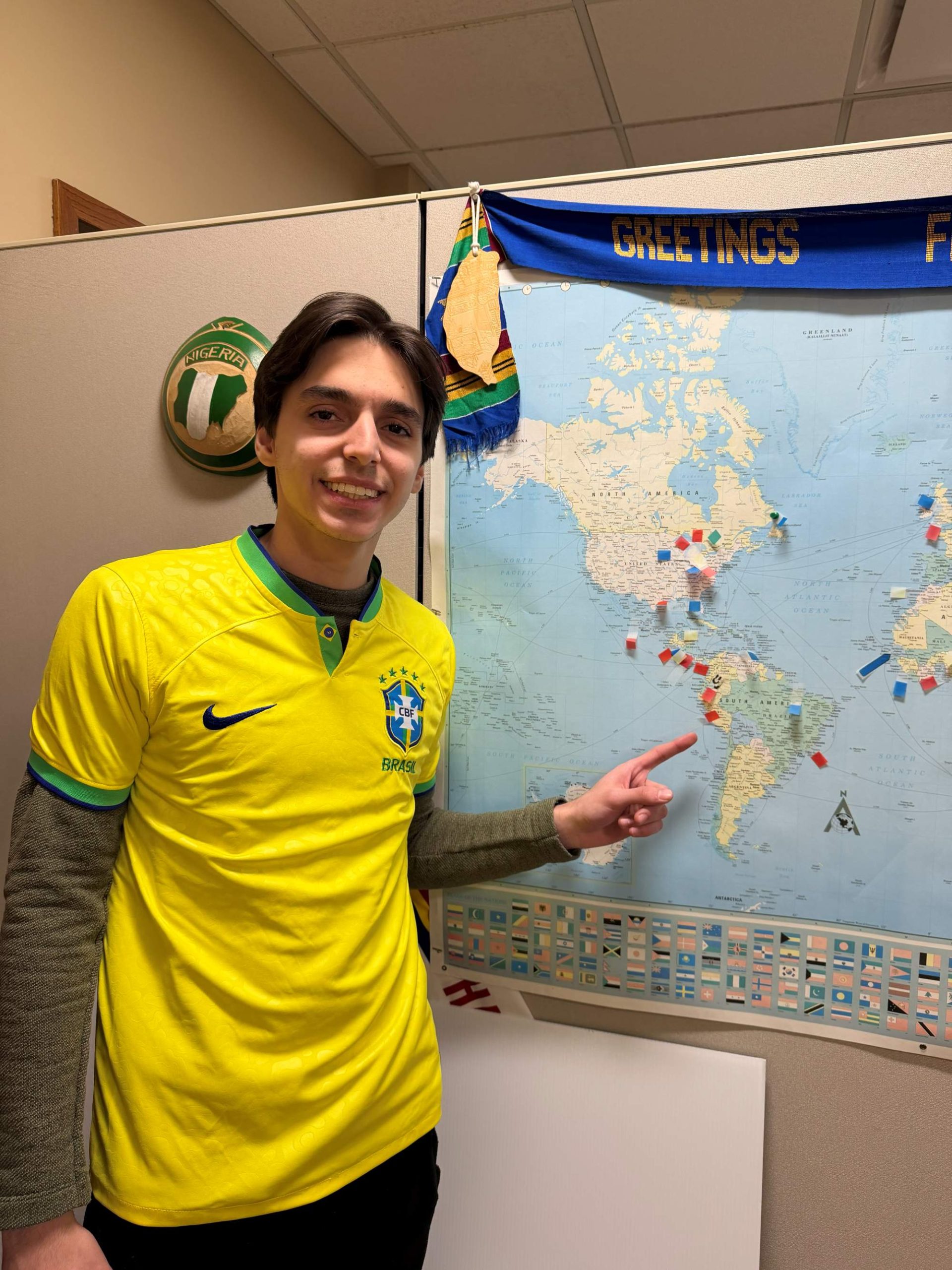
Felipe Carvalho Kalume, an international student studying business administration and management, shows where his home country Brazil is located on the map. Photo courtesy of Sofia Oganezova
Sofia Oganezova | Staff Writer
For many international students at Washtenaw Community College, studying in the United States is not just about earning a degree. It is about navigating financial, emotional and legal challenges in a system shaped by rising costs and strict immigration policies.
International students must constantly calculate how much they can spend, how many hours they are allowed to work and whether continuing their education in the U.S. is realistic. Behind every class schedule and tuition bill is a series of decisions that can determine whether a student stays enrolled, takes a break or leaves the country entirely.
Learning a new language
Felipe Kalume, an international student from Brazil majoring in business administration, did not originally plan to attend college in the U.S.
“I came here only to learn English, and then I loved my high school and decided to go to college here,” Kalume said.
What began as an educational opportunity quickly became a long-term commitment: one that came with unexpected challenges. Like many international students, Kalume said adjusting academically was only part of the struggle. Learning English at a fast pace while keeping up with coursework is demanding, especially when others underestimate the difficulty.
“They don’t know how hard it is to learn a new language so fast,” Kalume said.
Financial responsibilities
Under federal immigration rules, F-1 students face strict financial and employment requirements. Before enrolling, they must demonstrate that they can fully support themselves while studying.
“Before they can even come to WCC, they have to verify that they have the funding to support themselves and pay tuition and fees,” said Clarence Jennings Jr, vice president for student services.
At the same time, work opportunities are limited.
“They are limited because they are here on the F-1 visa, which is designed for a student to be a student — not an employee,” Jennings said.
During the academic year, F-1 students are generally restricted to part-time, on-campus employment. After graduation, they may apply for Optional Practical Training (OPT), which allows them to work in their field of study for one year.
“OPT gives us one year to work on something related to our major,” Kalume said.
For many students, that one year represents both hope and uncertainty: hope for professional experience and financial stability, and uncertainty about what comes next.
Rafael Lora, an international student from Colombia majoring in business management and the president of the International Student Association at WCC, said the challenges international students face often go unnoticed.
“People in the United States are from all parts of the world,” Lora said. “I think that’s why it’s not normal for them to care about our challenges as international students.”
Finances remain one of the biggest concerns.
“One of the main priorities for international students is money and how much we are able to pay for a university, for a college,” Lora said.
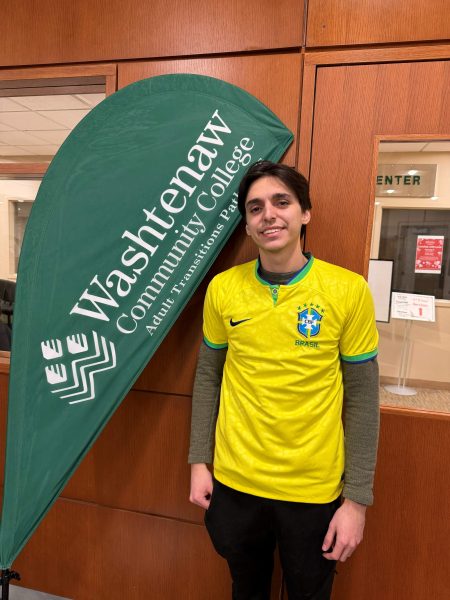
WCC offers resources to international students to support their academic, professional and personal success. Courtesy of Sofia Oganezova.
Adapting to social and cultural changes
Beyond financial pressure, international students are also navigating separation from family and familiar cultural support systems.
“They’re generally very far away from home and very far away from their family,” said Linda Blakey, provost for student services.
College leaders say building a sense of belonging is central to helping students adjust.
“We respect them. We want them to feel safe and secure here on our campus,” Jennings said. “Their views are welcome in our classroom because they bring different perspectives from different parts of the world, which makes the learning experience for all of our students much better.”
Blakey noted that international students receive structured academic guidance beyond general advising.
“F-1 students are assigned an academic advisor, but they also have a success coach,” Blakey said. “If they need strategies for time management or ways to take notes in class, they can work through those with their success coach.”
College resources and beyond
Many international students also use WCC as a transfer pathway.
“A lot of our international students are working on transfer programs, completing the first two years with us and then transferring on to another college or university,” Blakey said.
To help ease cultural adjustment, the college also connects students with peers from similar backgrounds.
“We try to connect students from the same countries so they have cultural relevancy and someone they can relate to,” Jennings said.
Even with academic support, balancing school, work and personal life can be overwhelming.
“It’s really hard to be able to plan your schedules, especially being able to socialize,” the student said. “But then, you need to know that your education comes first.”
For students like Kalume and Lora, the experience is shaped by both opportunity and pressure: by ambition and uncertainty. At WCC, administrators say the goal is not only enrollment, but ensuring that students who travel far from home find stability, support and a pathway forward.
One Reply to “More than studying abroad: International students’ lives at WCC”
Comments are closed.