Jade Guerriero | Washtenaw Voice
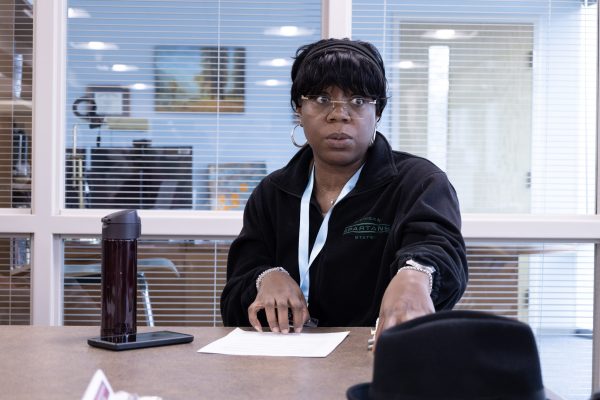
One question Hamilton gets a lot is whether she has seen a body sit up. She replied, “No” and clarified that it very rarely happens.
Alice McGuire | Editor
WCC’s annual personal storytelling event, Living Stories, featured dozens of titles for attendees to check out. This year’s event was held
on March 18, 2026 from 11 a.m. to 3 p.m.
The event originated as a classroom activity under the leadership of Claire Sparklin, professional faculty in communication. It has been a
staple of the campus community since 2018, having originally taken the form of a partnership with The Human Library, an international not-
for-profit organization that Sparklin was inspired by. “Living Stories” is also a staple activity when Sparklin teaches COM 225, intercultural
communication, on campus during the fall semester.
“That one’s a little more intimate because it’s closed door; it’s just within the classroom,” Sparklin said. She described Living Stories as
an event in which “people go into the library and, instead of taking a book off the shelf, they get to take a person and listen to their actual,
true, real-life, story about something that happened to them or a way that they identify.”
Jack Robichaud, 18, a digital media arts major, was inspired to become a story after participating in Living Stories as part of a
communications class. Robichaud’s title was “My Internal Battle: My Vegan Journey.” He was inspired to speak about veganism as it is an
issue he identifies as key in becoming his own person.
“It felt good to help or show a new perspective,” Robichaud said.
Molly Ledderman, a librarian who co-runs the event with Sparklin, described the event’s structure as one in which visitors can come and
“check out” a story that’s a “real, live person” in groups of 2 to 5 people for about 5 to 7 minutes, with about 10 minutes of time afterwards of
discussion.
“Even though some of the stories might sound sad, or someone talking about a hard life experience, a lot of the times, they’re talking
about how they overcame it. So people coming might hear something that they connect with, and it gives them hope too. So I would say it’s a
really beautiful event,” Ledderman said.
The event always has a counselor on site as well as a volunteer “vibes watcher” who keeps an eye out for if anyone is signalling distress.
Jim Baur, a licensed professional counselor as well as case manager and Care Team member, said, “For a lot of people, hearing other
peoples’ traumas can make it feel like they’re reliving their own personal trauma.”
Khinda Sadio Theierry Thibaui, a student majoring in cyber security, was inspired to become a story by his instructor as well as the
desire to share his culture with others while breaking some stereotypes.
“Many people don’t really know about Africa, and I just want to make my own contribution to make Africa more accessible,” Thibaui said,
after sharing his story titled, “From Amazon to American: How my Amazon Job Shaped My Life as an African in the US.” He described
practicing for the event in class as an “amazing” experience in which classmates helped him learn how to share his story and be proud of his
differences.
“People are so welcoming when they hear about your story. They will not judge you,” Thibaui said.
Nav Kaur, an ESL student and attendee, learned about the event from an extra credit opportunity. Kaur, who is originally from India,
found the event emotionally impactful and said that she walked away from it with the feeling that all humans, even if they might look different
from one another, are the same.
“Some people are looking happy, and there is a lot of struggle behind their happiness,” Kaur said.
Felicia Hamilton, a part time faculty member, said a highlight of the event was answering the variety of unique questions she gets when
speaking about her time working in a morgue in her story titled, “History in the Wayne County Morgue.”
“I hope listeners walk away with the understanding that we are all the same. We will all end up on that steel slab one day. So, all of these
differences that we focus on, these divisive, divisive things that we’re focusing on, don’t matter,” Hamilton said. “As I like to say, have the
audacity to be kind.”
Hamilton’s advice to those considering becoming stories was to “think about something in your life that you’re okay with telling that
doesn’t give you anxiety or make your heart palpitate” and to just be sure you’re picking something that you’re comfortable with sharing. The
opportunity to be featured as a story opens every January and all members of the campus community are invited to participate.